
Photographing school events like a photojournalist
The scoreboard says who won, but the photo should show how it felt. Covering school events well means working in poor light, getting close, timing the action and coming home with every name spelled right.
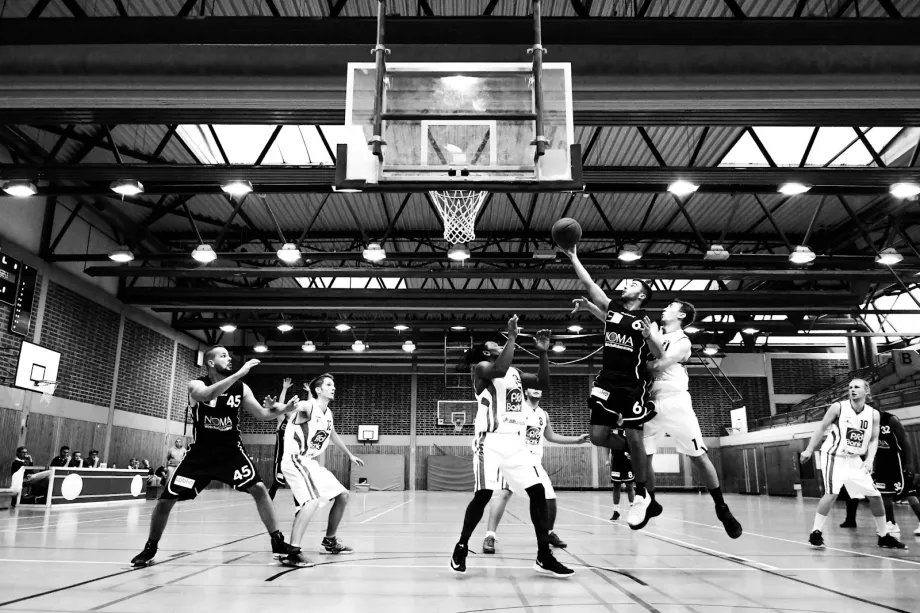
Late in a close game, a loose ball skids across the floor and three players dive for it. The bleachers rise behind them. A good news photo of that moment shows more than the score. It catches a player's face, the coach leaning in from the sideline and the student section on its feet. That is what event coverage is for.
Look for moments, not poses
Posed group shots have their place in a yearbook, but they rarely make a strong news photo. When a camera points at people, most of them put on a public face. Photojournalists wait for the moments when people forget about the camera: friends laughing between scenes at rehearsal, a student concentrating on a lab setup, a senior in tears after a final loss.
Keep the camera up and stay patient. Don't ask anyone to look at you or repeat what they just did. Watch reactions as well as the main action. During a speech, the faces in the audience often tell a better story than the person at the podium. Look for details that carry meaning, such as a student's hands shaping clay or a stagehand adjusting lights from the wings.
Gym and stage lighting
School venues are hard on cameras. Gym lights are often dim compared with daylight and can give everything a color cast. Some lamps also flicker in a way your eye cannot see but a fast shutter can catch, so the color and brightness change from frame to frame. Theater stages swing between bright spotlights and deep shadow.
Indoors, raise the ISO so you can keep the shutter speed fast enough to freeze movement. A higher ISO adds grain, but a sharp grainy photo beats a clean blurry one. Open your lens to its widest aperture to let in as much light as possible.
Set a custom white balance before the event begins, using a white card or sheet of plain paper under the venue lights. That keeps skin tones from turning orange or green. On stage, expose for the lit faces rather than the dark background, or the highlights will wash out.
Skip on-camera flash during performances and games. It distracts performers and athletes and destroys the atmosphere of a stage. Many coaches and directors ask photographers not to use it, so check the rules before you start.
Get closer
A common beginner habit is to stand at the back of the auditorium and zoom. A long lens can bring a subject closer, but physically moving closer changes the picture. You see expressions clearly, the background tells more of the story, and the viewer feels present.
Fill the frame. Find a spot near the front during an assembly. Step into the hallway at passing time. Walk the edge of the field during a parade or homecoming event. A wide lens used close to a person shows their surroundings and still keeps attention on them.
Get close without getting in the way. Respect safety lines, stay off the playing surface and follow directions from officials, coaches and teachers. Dress plainly so you blend in, move quietly, crouch to your subject's eye level when you can, and never block the view of people who came to watch.
Timing sports action
Sports photography depends on anticipation. If you press the shutter when you see the goal, you have already missed it. Learn the game well enough to know where the play is going.
Follow the player who is about to receive the ball, not the one who just threw it. Some photographers keep both eyes open, one on the viewfinder and one on the field, to spot plays developing outside the frame.
Use continuous shooting, often called burst mode, to catch peak action: the top of a jump, the instant the bat meets the ball, a swimmer breaking the surface for a breath. Peak moments last a fraction of a second, so use the fastest shutter speed the light allows. Outdoors in daylight that is easy. In a gym, it is a constant trade-off with ISO.
Phone or camera
Phones are always with you and do well in good light. They work fine for quiet features, portraits in the hallway and club meetings, and they make it easy to send images to an editor quickly.
For fast action or dim rooms, a camera with interchangeable lenses still has the edge. It gives you direct control over shutter speed, aperture and focus, handles low light better and keeps more detail when you crop.
If you shoot with a phone, turn off the automatic flash. A camera app that lets you lock focus and adjust exposure helps. Hold the phone with both hands, and avoid digital zoom, which only crops the image and makes it softer. Walk closer instead.
Collect names before you leave
A great photo with the wrong name under it is a mistake in print. Gather caption information before you leave the event.
After you get a strong sequence, approach the people in it. Introduce yourself, name your publication and ask for their full name and grade. Spell the name back to them. Write it down or record a quick voice note.
Ask what happened just before and after the shot. Note the score, the title of the play or what the student was building. Those details turn a nice picture into a news photo.
Ethics in the field
Readers trust a news photo to show what happened. Limit editing to adjustments like exposure, color balance, contrast and a sensible crop, the kind that bring the image closer to what you saw. Never add, remove or move anything in the frame.
Don't stage moments or ask people to re-enact something you missed. If it happened before you arrived, report what you can see now. Credibility takes a long time to build and very little to lose.
Frequently asked questions
Should student photographers use flash at school assemblies and performances?
Usually not. Flash distracts speakers, performers and athletes, and it tends to flatten the light. Many venues and coaches also ask photographers not to use it. A higher ISO and a wider aperture usually give better results. If in doubt, ask the organizer before the event.
How do you avoid blurry photos in a dim gym?
Blur comes from a shutter speed that is too slow for the movement. Raise the ISO so you can use a faster shutter speed, open the aperture as wide as your lens allows, and brace yourself or the camera. A little noise in the image is better than a blurry subject.
How many people should a group photo caption identify?
In a small group, identify everyone who is clearly visible, usually from left to right. In a big crowd, name the people who are the focus of the image and describe the rest as a group.